On this page
Largest Earthquakes of the 21st Century and Beyond
The most significant earthquakes of the modern era ranked by magnitude, from the 2024 Noto Peninsula event back to the 1960 Valdivia megaquake. Locations, depths, casualties, and tsunami data from USGS.
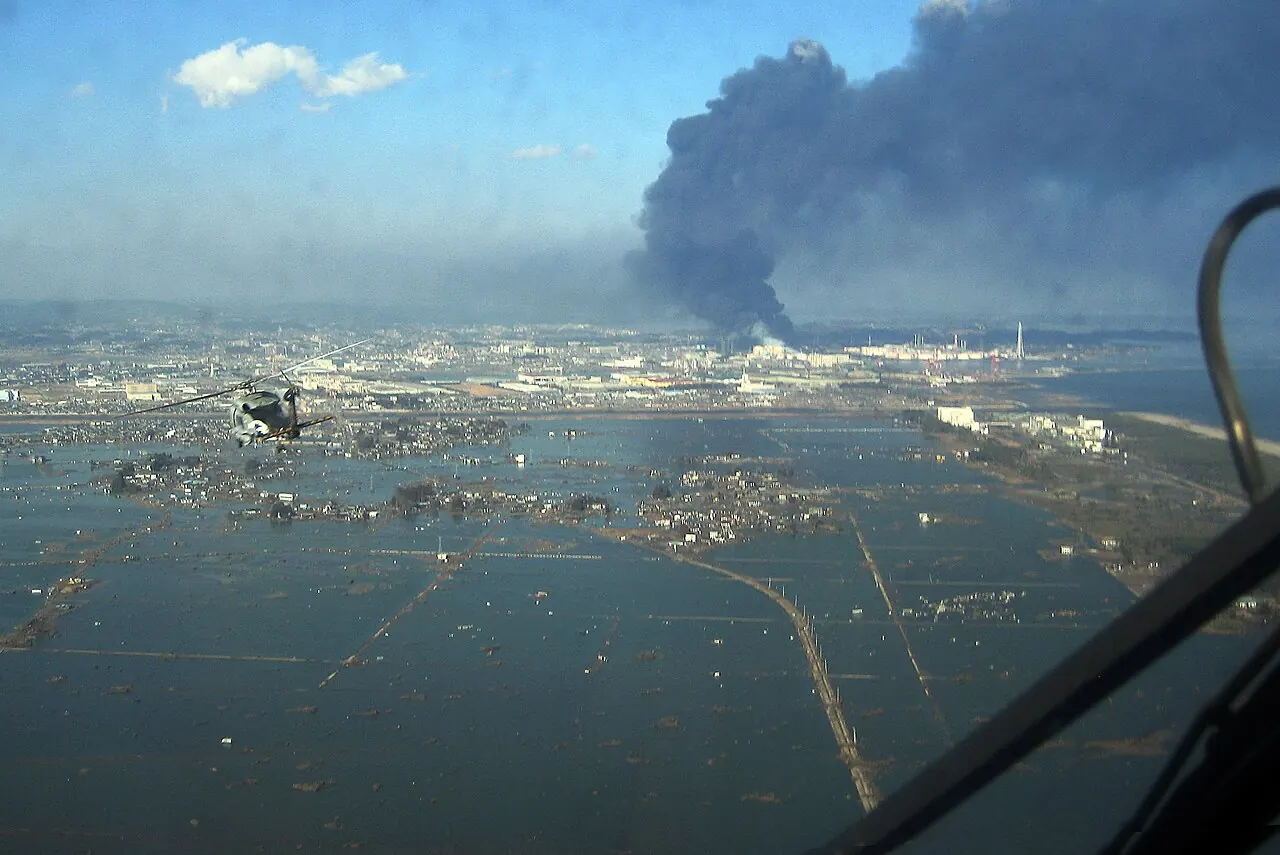
From the catastrophic 2004 Indian Ocean tsunami to the 2024 Noto Peninsula disaster, major earthquakes have reshaped coastlines, cities, and emergency response systems around the world. Below is a comprehensive table of all M7.0+ events documented in our database, drawn from USGS data and sorted newest first. Use the real-time earthquake map to see current seismicity anywhere on Earth.
All M7.0+ Earthquakes: Modern Seismic Record
| MAG | DATE | LOCATION | DEPTH | CASUALTIES | TSUNAMI | LINK |
|---|---|---|---|---|---|---|
| M7.3 | Dec 17, 2024 | Port Vila, Vanuatu | 57 km | 14 | No | View |
| M7.6 | Jan 1, 2024 | Noto Peninsula, Ishikawa, Japan | 10 km | 241 | Yes | View |
| M7.8 | Feb 6, 2023 | Kahramanmaraş, Turkey | 10 km | 56,000 | No | View |
| M7.7 | Feb 6, 2023 | Ekinözü / Hatay, Turkey (second shock) | 10 km | 56,000 | No | View |
| M8.1 | Aug 12, 2021 | South Sandwich Islands | 22.8 km | , | Yes | View |
| M8.2 | Jul 29, 2021 | Chignik, Alaska Peninsula, USA | 35 km | , | Yes | View |
| M8.1 | Mar 4, 2021 | Kermadec Islands, New Zealand | 28.9 km | , | Yes | View |
| M7.0 | Oct 30, 2020 | Aegean Sea (İzmir, Turkey / Samos, Greece) | 21 km | 117 | Yes | View |
| M8.0 | May 26, 2019 | Loreto, Peru | 122.6 km | 1 | No | View |
| M7.5 | Sep 28, 2018 | Palu, Sulawesi, Indonesia | 20 km | 4,340 | Yes | View |
| M8.2 | Aug 19, 2018 | Fiji (deep focus, 600 km) | 600 km | , | No | View |
| M7.1 | Sep 19, 2017 | Puebla, Mexico City, Mexico | 51.9 km | 369 | No | View |
| M8.2 | Sep 7, 2017 | Tehuantepec, Mexico | 47.4 km | 98 | Yes | View |
| M7.8 | Nov 13, 2016 | Kaikōura, New Zealand | 15.1 km | 2 | Yes | View |
| M7.8 | Apr 16, 2016 | Muisne, Ecuador | 20.6 km | 676 | No | View |
| M7.0 | Apr 16, 2016 | Kumamoto, Kyushu, Japan | 10 km | 273 | No | View |
| M8.3 | Sep 16, 2015 | Illapel, Chile | 22.4 km | 13 | Yes | View |
| M7.8 | Apr 25, 2015 | Gorkha District, Nepal | 8.2 km | 8,964 | No | View |
| M8.2 | Apr 1, 2014 | Iquique, Chile | 25 km | 6 | Yes | View |
| M7.7 | Sep 24, 2013 | Awaran, Balochistan, Pakistan | 15 km | 825 | No | View |
| M8.3 | May 24, 2013 | Sea of Okhotsk (deep focus, 598 km) | 598.1 km | , | No | View |
| M8.0 | Feb 6, 2013 | Santa Cruz Islands, Vanuatu | 24 km | 10 | Yes | View |
| M8.6 | Apr 11, 2012 | Wharton Basin, Indian Ocean | 20 km | , | No | View |
| M7.1 | Oct 23, 2011 | Van, Eastern Turkey | 7 km | 604 | No | View |
| M9.1 | Mar 11, 2011 | Tōhoku Region, Japan | 29 km | 19,747 | Yes | View |
| M7.7 | Oct 25, 2010 | Mentawai Islands, Indonesia | 20.6 km | 431 | Yes | View |
| M7.1 | Sep 4, 2010 | Canterbury, New Zealand | 11 km | , | No | View |
| M8.8 | Feb 27, 2010 | Maule Region, Chile | 22.9 km | 525 | Yes | View |
| M7.0 | Jan 12, 2010 | Port-au-Prince, Haiti | 13 km | 316,000 | No | View |
| M7.6 | Sep 30, 2009 | Padang, West Sumatra, Indonesia | 80 km | 1,115 | No | View |
| M8.1 | Sep 29, 2009 | Samoa Islands | 18 km | 192 | Yes | View |
| M7.9 | May 12, 2008 | Wenchuan, Sichuan, China | 19 km | 87,587 | No | View |
| M8.4 | Sep 12, 2007 | Bengkulu, Sumatra, Indonesia | 34 km | 25 | Yes | View |
| M8.1 | Apr 1, 2007 | Solomon Islands | 24 km | 52 | Yes | View |
| M7.6 | Oct 8, 2005 | Kashmir, Pakistan | 26 km | 87,351 | No | View |
| M8.6 | Mar 28, 2005 | Nias Island, Indonesia | 30 km | 1,313 | No | View |
| M9.1 | Dec 26, 2004 | Sumatra, Andaman Islands, Indian Ocean | 30 km | 227,898 | Yes | View |
| M7.9 | Nov 3, 2002 | Denali Fault, Alaska | 4.2 km | , | No | View |
| M7.7 | Jan 26, 2001 | Bhuj, Gujarat, India | 16 km | 20,085 | No | View |
| M7.6 | Sep 21, 1999 | Chi-Chi, Nantou, Taiwan | 33 km | 2,415 | No | View |
| M7.6 | Aug 17, 1999 | İzmit (Kocaeli), Turkey | 17 km | 17,118 | No | View |
| M7.1 | May 27, 1995 | Sakhalin Island (Neftegorsk), Russia | 24 km | 2,000 | No | View |
| M7.4 | Jun 20, 1990 | Manjil, Rudbar, Gilan Province, Iran | 18.5 km | 40,000 | No | View |
| M8.0 | Sep 19, 1985 | Michoacán, Mexico | 27.9 km | 9,500 | No | View |
| M7.2 | Jan 1, 1980 | Terceira, Azores, Portugal | 9 km | 61 | No | View |
| M7.8 | Jul 27, 1976 | Tangshan, Hebei, China | 22 km | 242,769 | No | View |
| M7.5 | Jun 16, 1964 | Niigata, Japan | 34 km | 26 | Yes | View |
| M9.2 | Mar 28, 1964 | Prince William Sound, Alaska | 25 km | 131 | Yes | View |
| M9.5 | May 22, 1960 | Valdivia, Chile | 25 km | 1,655 | Yes | View |
| M9.0 | Nov 4, 1952 | Kamchatka Peninsula, Russia | 21.6 km | , | Yes | View |
| M8.4 | Mar 3, 1933 | Sanriku, Japan | 15 km | 3,064 | Yes | View |
| M7.9 | Apr 18, 1906 | San Francisco, California, USA | 8 km | 3,000 | No | View |
| M7.8 | Dec 27, 1939 | Erzincan, Turkey | 15 km | 32,962 | No | View |
Source: USGS Earthquake Hazards Program. M7.0+ events, sorted by date descending. Casualty figures are official or best-available estimates. Two entries for 2023-02-06 Turkey reflect the twin-shock sequence (M7.8 + M7.7) within nine hours.
Key Patterns in Major Earthquake History
- The Japan and Kuril region has produced six M8.0+ events since 1933, including the M9.1 Tōhoku earthquake of 2011.
- South American subduction zones (Chile, Peru) generated three of the five largest earthquakes ever recorded: M9.5 Valdivia (1960), M8.8 Maule (2010), and M8.2 Iquique (2014).
- Turkey has been struck by major earthquakes roughly every decade, from Erzincan (1939) through İzmit (1999) to Kahramanmaraş (2023).
- Indonesia sits at the intersection of three tectonic plates and has experienced M8.0+ events in 2004, 2005, 2007, 2012, and 2021.
- Death toll correlates poorly with magnitude. The M7.0 Haiti earthquake (2010) killed 316,000 people while the M8.2 Chignik Alaska earthquake (2021) killed none.
Track Future Major Earthquakes
The best way to stay aware of significant earthquakes as they happen is with a real-time monitoring app. Earthquake Globe shows all USGS events within 60 seconds of detection on a live 3D globe.
You can set push notification thresholds to receive alerts only for M6.0+, M7.0+, or any magnitude you choose. With a global radius setting, you'll never miss a major world event.
Related Reading
FAQ
Frequently Asked Questions
Where do most major earthquakes happen?
Major earthquakes occur predominantly along the Pacific Ring of Fire, including Japan, Indonesia, Chile, and the western US, consistent with long-term seismic patterns. Subduction zones continue to produce the largest events. Collision zones in Turkey, Iran, Nepal, and China also generate frequent destructive earthquakes.
How can I track major earthquakes as they happen?
Earthquake Globe shows all M1.0+ events in real time on a 3D globe. You can filter by magnitude to see only M6.0+ or M7.0+ events. Push notifications will alert you immediately for any event above your chosen threshold, anywhere in the world.
What defines a "major" earthquake?
Seismologists define major earthquakes as M7.0 and above. Events of M8.0+ are classified as "great" earthquakes and typically cause widespread destruction and can generate tsunamis. Events above M9.0 are extremely rare, occurring roughly once every 20-50 years.
Does the number of major earthquakes increase each year?
The global rate of major earthquakes is relatively constant over long time periods. Apparent increases in earthquake news coverage are largely due to improved detection networks, faster reporting, and social media amplification rather than actual increases in seismicity.
What is a megathrust earthquake?
A megathrust earthquake occurs at a subduction zone where one tectonic plate dives beneath another. They are the most powerful class of earthquakes, capable of exceeding M9.0. The three largest recorded earthquakes, Valdivia 1960 (M9.5), Prince William Sound 1964 (M9.2), and Sumatra 2004 (M9.1), were all megathrust events.
Get Alerted for Every Major Earthquake
Free iPhone app. Set a M7.0+ global alert and never miss a significant event.