On this page
Japan Earthquake: Causes, Measures, and Safety
Discover the causes of earthquakes in Japan, its unique seismic activity, the JMA's Shindo scale, and safety measures to stay informed.
Why Japan is a Major Seismic Zone
Japan is universally recognized as one of the most earthquake-prone countries. This seismic reality is an integral part of its geography and history. Understanding the dynamics behind each earthquake in Japan is essential for anyone living or traveling there.
The country faces constant seismic activity, making it a natural laboratory for seismology. Approximately one-fifth of global earthquakes with magnitude M6 or higher occur in Japan, despite its small land area.
This high frequency is explained by the archipelago's unique position on the planet. Continuous vigilance is necessary for residents and visitors. Japan has developed some of the world's most advanced detection and prevention systems.
Tectonic Plates: The Engine of Seismic Activity
Japan's intense seismic activity stems from its position at the junction of four major tectonic plates. These plates are the Pacific Plate, the Philippine Plate, the Eurasian Plate, and the North American Plate.
The Pacific Plate and the Philippine Plate subduct beneath the North American and Eurasian Plates. This process, called subduction, is the primary cause of earthquakes. It generates enormous stress in the Earth's crust.
When these stresses are released, they cause earthquakes of various magnitudes. These events occur at varying depths, from shallow to deep earthquakes. The complex interaction of these plates shapes Japan's seismic landscape.
Japan Meteorological Agency and the Shindo Scale
The Japan Meteorological Agency (JMA) is the official body responsible for monitoring seismic activity and issuing alerts. Unlike magnitude, which measures the energy released by an earthquake, the JMA uses the Shindo scale (震度) to express the seismic intensity felt at a given location.
The Shindo scale ranges from 0 to 7. Levels 5 and 6 are subdivided into "lower" (弱, jaku) and "upper" (強, kyō). A Shindo 0 means the earthquake is imperceptible, while a Shindo 7 indicates extremely violent and devastating shaking, making it impossible to remain standing.
This distinction is crucial because an earthquake's magnitude can be high, but its Shindo intensity will be lower if the epicenter is distant or deep. This helps residents understand the direct risk level. For more details on preparation, consult our earthquake safety section.
JMA bulletins are issued almost immediately after an event. They provide vital information on the epicenter's location and the Shindo intensity observed in different regions. This rapid communication system is a pillar of disaster management in Japan.
Major Risks: The Nankai Trough and the Tohoku Earthquake
The Nankai Trough, located off the Pacific coast, is a subduction zone where a "mega-earthquake" is expected. The Japanese government estimates there is a 70 to 80% probability that an M8 to M9 magnitude event will occur there within the next 30 years.
In response to this risk, the JMA introduced an additional information system for the Nankai Trough earthquake in 2019. This system provides advisory notices in case of unusual seismic activities. It allows for increased preparation among the population.
The Tohoku earthquake, with a magnitude of M9.0, struck on March 11, 2011. It was the most powerful ever recorded in Japan. It triggered a devastating tsunami, causing significant human and material losses. This event marked a turning point in disaster management.
After Tohoku, Japan strengthened its tsunami warning systems, coastal dikes, and earthquake-resistant building codes. The lessons learned from this disaster continue to influence safety policies. You can find other earthquake guides to learn more.
Preparation and Safety Measures in Japan
Preparation is paramount to minimize earthquake risks in Japan. Authorities encourage residents to have an emergency kit ready, containing water, food, radios, and medical supplies. Evacuation drills are regular.
During an earthquake, the golden rule is "Drop, Cover, and Hold On." You should get to the ground, cover your head and neck with your arms or under sturdy furniture, and hold on until the shaking stops. Stay away from windows and heavy objects.
After the earthquake, be aware of aftershocks and tsunami warnings if you are near the coast. Follow instructions from local authorities and emergency services. Having a family plan is crucial for knowing where to reunite. Regularly check the latest news to stay informed about best practices.
Stay Informed with Earthquake Globe
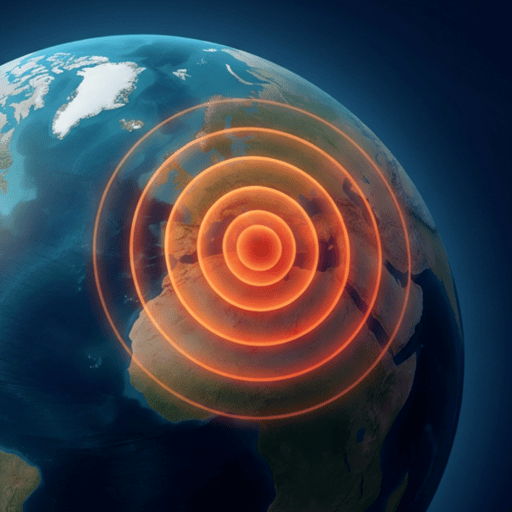
For those interested in a global and immediate view of seismic activity, the Earthquake Globe application offers a complement to national bulletins. It displays USGS data on an interactive 3D globe in real time, allowing you to follow events worldwide.
The application provides a broader perspective than just JMA information, covering all major earthquakes globally. It's a useful tool for travelers, researchers, or simply curious individuals. You receive notifications for significant seismic events, no matter where they occur.
Whether you are in Japan or elsewhere, understanding seismic activity and being prepared is an essential step. Earthquake Globe helps you stay connected to the seismic world, offering a reliable and accessible source of information. The application is a simple way to access accurate and up-to-date earthquake data.
Related Reading
How our real-time earthquake map works
Explore global seismic activity on our interactive 3D globe and discover how data is displayed in real time.
Earthquake Safety Tips
Learn essential steps to protect yourself before, during, and after an earthquake and prepare your emergency kit.
Subscribe to Earthquake Notifications
Receive personalized alerts directly on your phone for major earthquakes in regions you care about.
FAQ
Frequently Asked Questions
Why are there so many earthquakes in Japan?
Japan is located at the junction of four major tectonic plates: Pacific, Philippine, Eurasian, and North American. The movements and subduction of these plates generate enormous stress in the Earth's crust, leading to frequent and intense seismic activity.
What is the Shindo scale and how does it differ from magnitude?
The Shindo scale measures the seismic intensity felt at a specific location, ranging from 0 to 7 (with subdivisions for 5 and 6). Magnitude, on the other hand, measures the total energy released by an earthquake at its source. A high-magnitude earthquake can have a variable Shindo intensity depending on the distance from the epicenter and depth.
What is the largest earthquake ever recorded in Japan?
The largest earthquake ever recorded in Japan is the Tohoku earthquake, which occurred on March 11, 2011. It had a magnitude of M9.0 and caused a powerful tsunami, leading to widespread destruction and thousands of casualties.
What is the risk associated with the Nankai Trough?
The Nankai Trough is a subduction zone where a mega-earthquake of magnitude M8 to M9 is highly anticipated. The Japanese government estimates a 70 to 80% probability that this event will occur within the next 30 years, leading to increased monitoring and specific warning systems.
How can I prepare for an earthquake in Japan?
Preparation includes creating an emergency kit containing water, food, medicine, and a radio. It is essential to know the "Drop, Cover, and Hold On" procedure during an earthquake and to have a family reunion plan. Stay informed about local alerts.
Follow Earthquakes Live on Earthquake Globe
Download the Earthquake Globe app to get real-time updates on global seismic activity, directly on your device.