On this page
Earthquake Today: How to Check Official Sources Fast
If you're looking for information on an earthquake today in France or elsewhere, discover how official sources and our app can help you stay informed.
An Earthquake Today in France? How to Know
If you're wondering if there was an earthquake today in France or anywhere else in the world, you're not alone. This question is common, especially after feeling a slight tremor or hearing news.
Understanding how to check seismic activity in real-time is essential to dispel uncertainty. Whether it's a local tremor or a distant event, access to reliable information is paramount.
We will explore the best sources for accurate data and understand what this information means. This will help you stay informed and prepared for seismic phenomena.
Official French Sources: RENASS and BCSF
In France, the most reliable sources for local seismic activity are the National Seismic Monitoring Network (RENASS) and the French Central Seismological Bureau (BCSF). These organizations monitor and record earthquakes on national territory and in neighboring regions.
RENASS operates a dense network of seismological stations that detect even the slightest tremors. Their data are crucial for a precise scientific understanding of active zones in France.
The BCSF, for its part, is responsible for collecting, validating, and disseminating seismological data. It provides information bulletins on recent events, often with maps and technical details.
Consulting their websites is the first step if you have felt a tremor in France and are looking for quick confirmation. Their reports are updated regularly after event detection and analysis.
Interpreting Seismic Data: Magnitude and Depth
When you consult seismic reports, two key terms often come up: magnitude and depth. Magnitude, generally expressed as moment magnitude (Mw), measures the energy released by the earthquake.
A higher magnitude means more energy, but the impact on the ground also depends on depth. Shallow earthquakes, meaning those occurring less than 70 kilometers from the surface, generally cause more intense shaking at the epicenter.
In France, many earthquakes are of low magnitude and often shallow, which explains why they are felt despite their moderate size. Depth directly influences the distance over which seismic waves dissipate before reaching the surface.
The intensity felt on the ground is measured by the Modified Mercalli Intensity (MMI) scale, which describes observed effects. Unlike magnitude, which is unique for an event, intensity varies with distance from the epicenter and local geological conditions.
Seismicity in France: A Real, Often Moderate Risk
Although France is not located on a major fault line like California, seismic activity is a reality, although often moderate. The territory is crossed by several active seismic zones, notably the Alps, the Pyrenees, the Massif Central, and the Rhine plain.
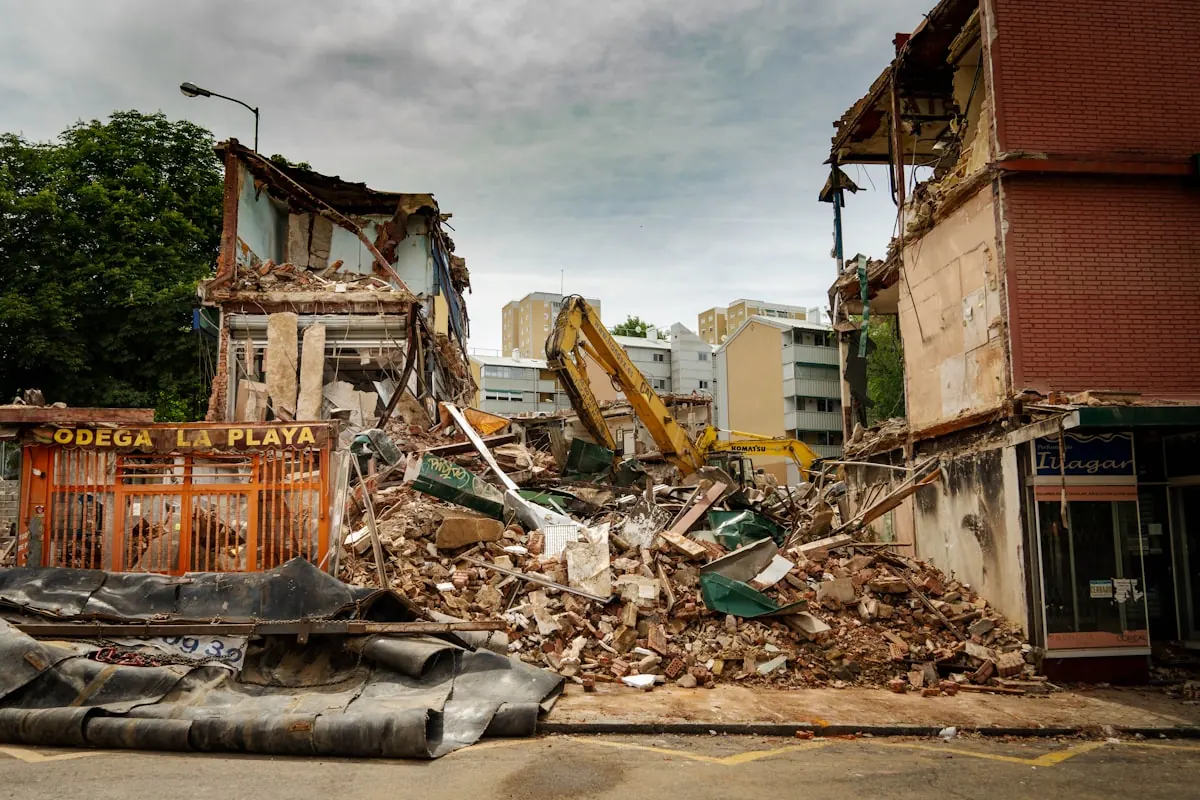
The most significant event in recent years was the Le Teil earthquake in Ardèche, with a magnitude of 5.4, which occurred in November 2019. This relatively shallow earthquake caused significant damage in the region and highlighted the vulnerability of certain constructions.
The Alpes-Maritimes are also subject to earthquake swarms, often of low magnitude, but frequent enough to be felt by the population. Historically, France has experienced more powerful earthquakes, such as the Lambesc earthquake in Provence in 1909, estimated at a magnitude of about 6.
These events highlight the importance of preparation. Learning life-saving actions and knowing how to secure your environment is crucial. For complete safety information, consult our safety guides.
Knowledge of regional seismicity allows communities to implement adapted construction standards and citizens to better prepare for eventualities.
Monitoring Global Seismic Activity with Earthquake Globe
Beyond national sources, many people are interested in global seismic activity. Organizations like the USGS (United States Geological Survey) provide real-time data on earthquakes worldwide.
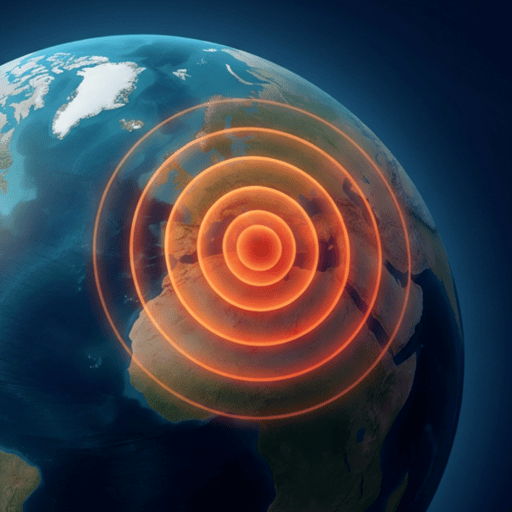
Earthquake Globe is an application that aggregates this global data, displaying it on an interactive 3D globe. It offers an immediate visualization of recent seismic events, from small tremors to major earthquakes.
The app shows where an earthquake happened today, along with its magnitude, depth and time. You can spin the globe and tap any marker to read the details.
With Earthquake Globe, you can set up custom alerts to be informed of earthquakes in specific areas or above a certain magnitude. It's an ideal complement to official bulletins for proactive global monitoring.
Whether you are a geology enthusiast, a traveler, or simply concerned about your environment, this tool offers a clear window into our planet's seismic dynamics. The real-time earthquake map is always accessible.
Personal Preparation for Seismic Risk
Facing seismic risk, even moderate, individual preparation is the best defense. The fundamental principle is 'Drop, Cover, and Hold On' - get down, protect yourself, and hold on. Practice this action with your family so it becomes a reflex.
Assembling an emergency kit is another crucial step. This kit should contain water, non-perishable food, a first-aid kit, a battery-powered radio, a flashlight, and copies of important documents. It should be able to sustain your needs for at least 72 hours.
Also, identify safe meeting points outside your home and workplace. Discuss your emergency plan with your loved ones so everyone knows how to react and where to meet.
For more detailed advice on how to prepare, explore our practical guides on earthquake safety. Good preparation significantly reduces risks and anxiety in case of an event.
Related Reading
Understanding Different Earthquake Magnitudes
Discover what magnitude numbers mean to better assess an earthquake's power.
Your Earthquake Emergency Kit: What to Have
Prepare for any eventuality with our guide to assembling a complete survival kit.
The Real-Time Earthquake Map
Visualize global and local seismic activity on our interactive map, updated live.
FAQ
Frequently Asked Questions
What is the average magnitude of earthquakes in France?
Most earthquakes in France are of low magnitude, often below 3. They are numerous, but only the strongest are felt. Events of magnitude 4 or higher are rare but can cause damage, like the Le Teil earthquake in 2019.
Is France an active seismic zone?
Yes, France is an active seismic zone, although its activity is moderate compared to other regions of the world. The most active zones are in the Alps, Pyrenees, Massif Central, and the Rhine Graben region, where faults can generate earthquakes.
Can an earthquake be predicted?
No, seismologists cannot predict the exact time, location, or magnitude of a future earthquake. Research focuses on assessing long-term risks and understanding potential zones, but accurate prediction remains impossible with current technologies.
What should I do if I feel an earthquake in France?
If you feel a tremor, immediately apply the 'Drop, Cover, and Hold On' principle. Get down on the floor, protect your head and neck under a sturdy piece of furniture, and hold on. Stay indoors until the shaking stops.
How do earthquake alerts work in France?
France does not have a national early warning system for earthquakes, as warnings would often be too short to be useful for local events. However, organizations like RENASS and BCSF quickly disseminate information after an earthquake has occurred.
Track Earthquakes in Real-Time with Earthquake Globe
Download our iPhone app to instantly access global seismic data and receive custom alerts.