On this page
The Complete Earthquake Preparedness Guide
A comprehensive earthquake preparedness guide covering family plans, emergency kits, home retrofitting, digital tools like Earthquake Globe, drills, and post-event recovery steps.
Overview
Earthquake preparedness comes down to three things: a family plan for reconnecting when phone lines are jammed, a stocked kit you can grab in seconds, and a home that stays anchored to its foundation. None of it requires special equipment or a large budget, just a plan made before the ground starts moving.
The USGS recorded 8 magnitude 6.0+ earthquakes and 151 magnitude 5.0+ earthquakes worldwide in the 30 days before this update (Aug 20 - Sep 19, 2026). Most regions never see a headline-making event, but small and moderate shaking is a near-constant background rate, which is why a plan made once pays off for years.
This article covers the essential information about earthquake preparedness to help you understand the risks, stay informed, and take action when needed.
Family Communication Plan
Pick one out-of-town contact that everyone in the family calls or texts after an earthquake. Local phone networks jam with call traffic in the first hour, but text messages usually still get through since they need far less bandwidth. Agree on two meeting points in advance: one right outside your home for a sudden evacuation, and one outside your neighborhood in case you cannot get back to it.
Write the plan down, put a copy in every go-bag, and walk through it with kids twice a year so it is muscle memory, not a document nobody reads. The full step-by-step template, including what to say if you only have a few seconds of signal, is in the family communication plan guide.
Emergency Kit
A basic 72-hour kit covers water (about 4 liters per person per day), non-perishable food, a first-aid kit, any prescription medications, a flashlight, a battery or hand-crank radio, cash in small bills, and copies of ID and insurance documents in a waterproof bag. Store it somewhere you can reach in the dark in under a minute, not in a locked closet or the back of the garage.
The full item-by-item checklist, including what to add for infants, pets, and anyone with ongoing medical needs, is in the earthquake survival kit checklist.
Home Retrofitting
Homes built before the 1980s often lack the foundation bolts, cripple-wall bracing, and shear panels that keep a house attached to its foundation during strong shaking, retrofitting adds these after the fact. Inside, the cheap and fast wins are anchoring bookshelves and water heaters to wall studs, using latches on kitchen cabinets, and securing anything heavy hanging above a bed or a couch.
Full guidance on what to check room by room is in earthquake safety at home.
Key Facts
- Real-time USGS data updates every 60 seconds on the Earthquake Globe map.
- Set custom push notifications with magnitude threshold and geographic radius for any region.
- Monitor high-risk zones including Turkey, Japan, California, and Indonesia.
- Earthquake Globe works offline with cached data, see recent events even without internet.
How to Stay Informed
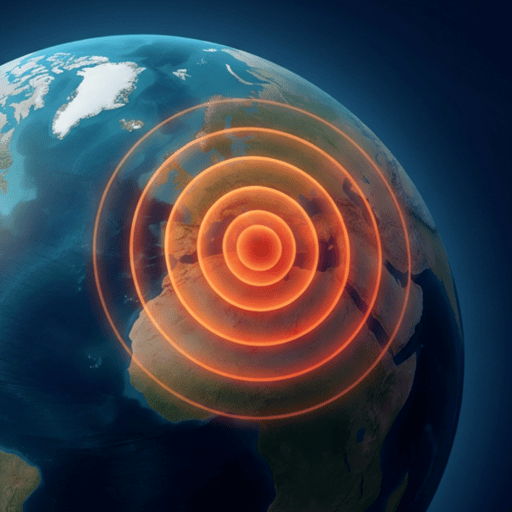
The best preparation for earthquakes combines physical readiness (emergency kit, family plan, structural awareness) with real-time digital tools. Earthquake Globe provides the digital awareness layer: a live global earthquake map and customizable push alerts for your specific area.
Configure a radius alert of 100-250 km around your location with a M4.0+ threshold to receive meaningful notifications for events that could affect you.
Related Reading
Earthquake Notifications
Earthquake notifications for iPhone
Real-Time Map
Track earthquakes live on a 3D globe
Earthquake Safety Tips
Essential safety guidance before and after a quake
Family Communication Plan
A step-by-step template for staying in touch
Survival Kit Checklist
Everything to pack in a 72-hour go-bag
Earthquakes by Region
Explore seismic zones worldwide
FAQ
Frequently Asked Questions
What is the key takeaway from this article?
Understanding earthquake risks, preparedness strategies, and using real-time tools like Earthquake Globe significantly improves your ability to stay safe and informed during seismic events.
How does Earthquake Globe help with this topic?
Earthquake Globe provides real-time USGS earthquake data on a 3D globe, customizable push notifications with radius and magnitude filters, and offline event caching, giving you situational awareness for any seismic region worldwide.
Where can I learn more about earthquake safety?
The USGS, FEMA, and Red Cross all provide comprehensive earthquake preparedness resources. Earthquake Globe's notification system gives you the real-time awareness component of a complete safety strategy.
Is Earthquake Globe free?
Yes. Earthquake Globe is completely free with no subscriptions, no in-app purchases, and no ads. No account is required.
What is a go-bag for earthquake preparedness?
A go-bag (or grab-bag) is a pre-packed backpack containing 72-hours of emergency supplies you can carry if you must evacuate quickly. It typically includes water, food, first-aid kit, medications, copies of important documents, cash, a flashlight, phone charger, and a change of clothes. Keep it near your front door.
Stay Informed with Real-Time Earthquake Alerts
Free iPhone app. Custom radius + magnitude alerts. No account needed.