On this page
How Earthquake Early Warning Systems Work
Discover how earthquake early warning systems detect P-waves, calculate magnitude, and send alerts seconds before shaking arrives. Learn about ShakeAlert, JMA, and how apps like Earthquake Globe fit in.
What Is an Earthquake Early Warning System?
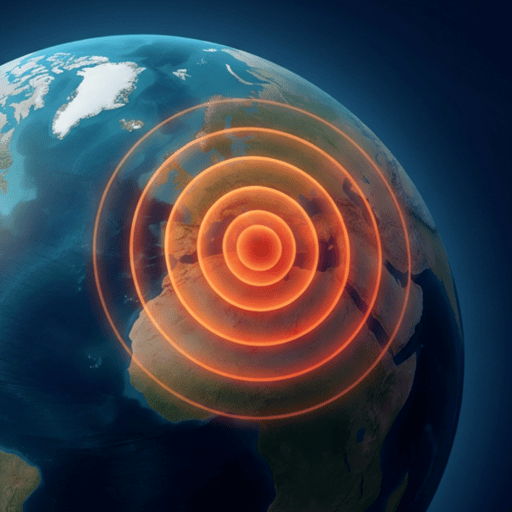
An earthquake early warning (EWS) system detects the first, less damaging seismic waves from an earthquake and issues an alert before the stronger, more destructive waves arrive. It does not predict earthquakes, by definition, the earthquake has already started when the warning is issued.
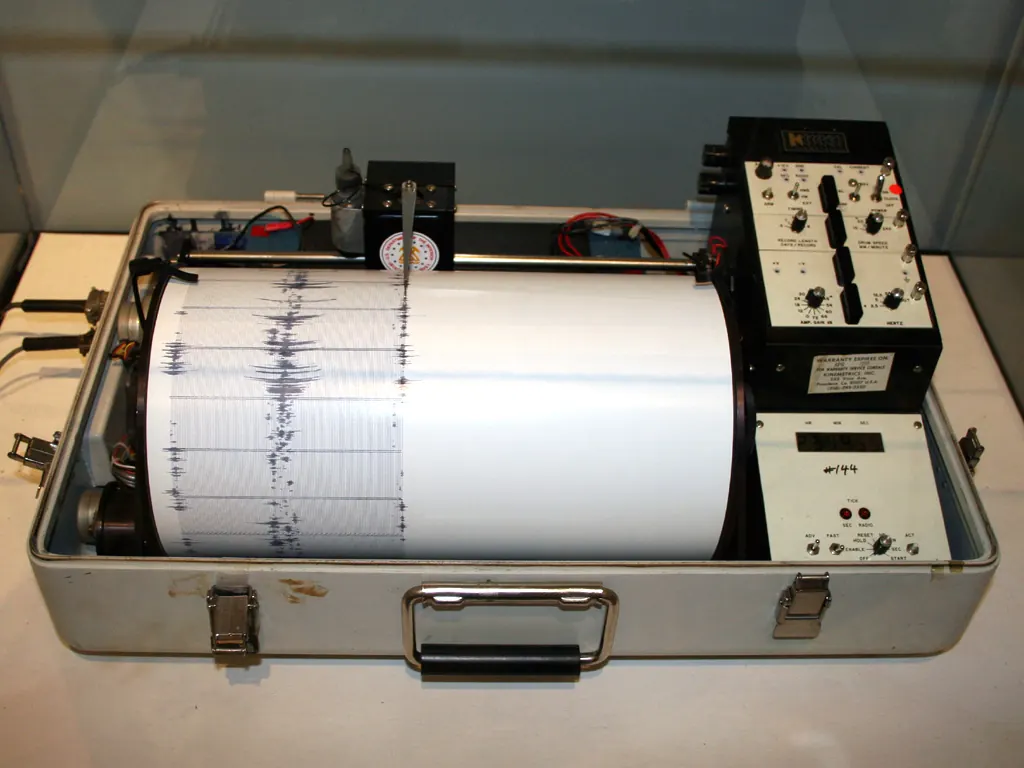
The system exploits a simple physics fact: seismic waves travel through the Earth at a finite speed (roughly 3-8 km/s for different wave types), while electronic signals travel at the speed of light. A network of sensors near the epicenter can detect the initial waves, characterize the earthquake, and relay an alert faster than the destructive shaking propagates outward.
P-Waves vs S-Waves: The Critical Difference
Earthquakes generate two primary types of seismic body waves. P-waves (primary waves) are compressional waves that travel faster, approximately 6-8 km/s through crustal rock. They arrive first and cause only mild shaking, like a gentle rumble or push. S-waves (secondary waves) travel slower at roughly 3-4 km/s but carry far more energy, producing the violent side-to-side shaking that collapses buildings.
Early warning systems detect P-waves and issue alerts during the window between P-wave and S-wave arrival. This window grows with distance from the epicenter, providing longer warning times for people further away, while offering little or no warning for those near the rupture zone.
Timeline: From Earthquake to Alert on Your Phone
Understanding the exact sequence of events helps set realistic expectations for early warning systems:
- T+0 seconds: Fault rupture begins at the hypocenter (focus point underground).
- T+2-5 seconds: Nearest seismic sensors detect P-wave arrival and begin processing.
- T+5-10 seconds: Seismic network algorithms determine preliminary magnitude, depth, and epicenter location.
- T+8-15 seconds: Alert is transmitted via internet/satellite to government systems and mobile networks.
- T+10-20 seconds: Wireless Emergency Alert reaches iOS/Android devices within 50 km of epicenter.
- S-waves arrive 20-60+ seconds after P-waves depending on distance.
For a M6.5 earthquake, someone 80 km from the epicenter might receive 15-25 seconds of warning. Someone 200 km away might receive 45-60 seconds. Near the epicenter, within 10 km, there may be no meaningful warning at all.
Countries with Operational EWS Systems
Several nations have invested heavily in public earthquake early warning infrastructure:
- Japan (JMA, Japan Meteorological Agency): The most advanced EWS in the world. Operational since 2007, it uses over 1,000 seismometers to deliver nationwide alerts within seconds. Alerts appear on all mobile phones, TV broadcasts, and public systems simultaneously.
- Mexico (SASMEX): Operational since 1991, one of the world's oldest public EWS systems. Provides alerts to Mexico City, Acapulco, Oaxaca, and other cities, with loudspeakers throughout urban centers.
- United States (ShakeAlert): Covers California, Oregon, and Washington. Delivers public alerts via Wireless Emergency Alerts (WEA) to smartphones. Became publicly operational in 2019-2021.
- Chile, Taiwan, South Korea: All operate national EWS systems with varying capabilities and public delivery mechanisms.
- Turkey: AFAD operates a national seismic monitoring network. Public EWS capabilities are expanding following the 2023 disasters.
How Earthquake Globe Fits In
Earthquake Globe is not an early warning system, it's a real-time awareness and notification tool. While EWS systems like ShakeAlert provide government-issued alerts seconds before shaking, Earthquake Globe provides:
- Detailed post-event push notifications with magnitude, depth, distance, and location
- Live global visualization of all M1.0+ events on a 3D globe
- Customizable radius and magnitude filters for your specific needs
- Coverage for all countries, not just those with national EWS systems
- Historical event browsing and local offline cache
The two tools are complementary: government EWS for immediate shaking warning, Earthquake Globe for comprehensive awareness and post-event situational intelligence.
Limitations of Early Warning Systems
EWS systems have real constraints that users should understand:
- No warning for epicenter areas: People within ~10 km of the rupture receive no warning before shaking hits.
- Magnitude uncertainty: Initial alerts may underestimate magnitude for very large earthquakes. Japan's 2011 M9.0 event was initially estimated as M7.2.
- False positives: Sensor malfunctions, thunderstorms, and industrial events occasionally trigger false alerts.
- Limited actions in seconds: Even 30 seconds is not enough to evacuate a building. EWS is most useful for automated responses (stopping trains, opening fire station doors) and Drop-Cover-Hold positions.
Related Reading
FAQ
Frequently Asked Questions
How many seconds of warning does an earthquake early warning system provide?
The amount of warning depends on distance from the epicenter. People near the rupture may receive 0-5 seconds. Those 50 km away may get 10-20 seconds. People 100+ km away can receive 30-60 seconds or more, enough time for protective actions.
Do earthquake early warning systems predict earthquakes?
No. EWS systems do not predict earthquakes. They detect a quake that has already started and issue an alert before the damaging S-waves arrive. It is a real-time warning system, not a prediction system.
Which countries have earthquake early warning systems?
Japan, Mexico, Chile, Taiwan, Romania, Turkey, South Korea, and the United States (West Coast) all operate public earthquake early warning systems. Japan's system (JMA) is the most advanced, providing nationwide alerts within seconds.
How can I receive earthquake early warning alerts?
In the US, ShakeAlert alerts are delivered automatically to iOS and Android phones via Wireless Emergency Alerts (WEA). In Japan, JMA alerts appear on all mobile devices. Earthquake Globe supplements these with detailed push notifications including magnitude, depth, and distance from your location.
Can earthquake early warning systems prevent all earthquake deaths?
No. Early warning systems save lives by providing seconds to a minute of advance notice, allowing people to drop and take cover, trains to brake, and surgeries to be paused. However, they cannot prevent building collapses or the earthquake itself. A multi-layered approach combining early warning, seismic-resistant construction, and public preparedness is needed to reduce casualties significantly.
Track every earthquake in real time
Free push alerts for iPhone. No subscription. No account.